Chef Gus of Published on Main has spent 17 years in Vancouver refining a culinary voice shaped by an unlikely journey—from running an Old Spaghetti Factory dishpit at 16 in Winnipeg to stages at Michelin-starred restaurants in Germany and a gruelling summer at Noma in Copenhagen. After studying at Red River College and working alongside Scott Jaeger at Pear Tree Restaurant, he opened Published in December 2019 with an ambitious 36-item menu built on BC’s extraordinary ingredient library: wild mushrooms foraged from Boston Bar to the Sea to Sky corridor, 200 kilos of hand-harvested Sunshine Coast kelp pickled for the year, and farmer relationships he’s nurtured for over 15 years.
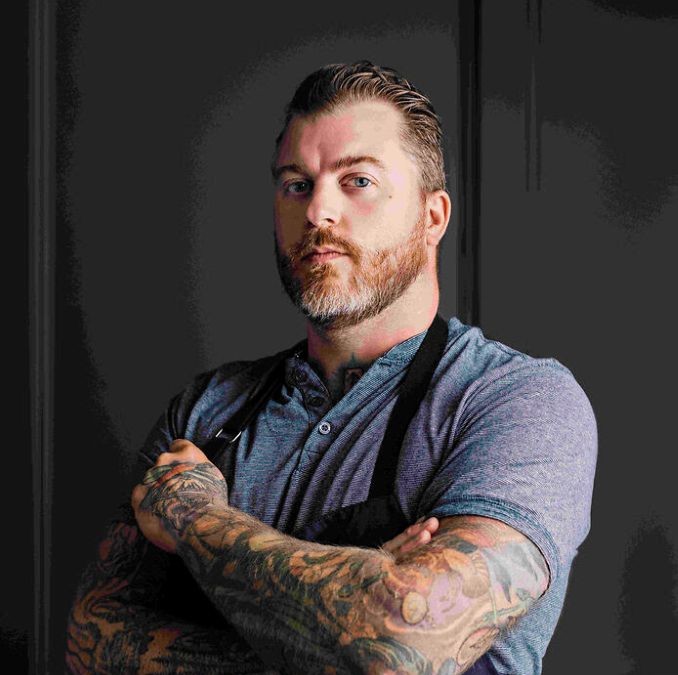
What first inspired you to become a chef, and how has your journey led you to Vancouver?
It’s been a long, multifaceted journey that started at 13 or 14, washing dishes at the Old Spaghetti Factory in Winnipeg in 2001. It was incredibly busy, and I had friends working there—by 16, I was essentially running the place. It was party time, but I was really good at it. I ended up dropping out of high school because I was enjoying the work so much. My parents told me that if I was going to pursue this path, I needed to go to culinary school.
I enrolled at Red River College’s two-year culinary program, which was really formative with amazing instructors. The structure was nine months of classes followed by three months of practicum. For my second practicum in 2008, I went to Germany and worked at a few Michelin-starred restaurants and a hotel. When my contract ended there, I met Scott Jaeger of Pear Tree Restaurant at the Culinary Olympics. When I returned to Winnipeg afterward, it felt small.
I called Scott, and he told me to meet him in Vancouver. So I drove out from Winnipeg with $800 cash in my beat-up car, crashed on couches until I found an apartment in North Burnaby, and spent about six years there. Working side by side with Scott taught me an enormous amount and really expanded my repertoire.
Eventually, I left that position to open a farm-to-table restaurant at UBC in partnership with the alumni—a student-governed, $20 million food service operation. Six months after we opened, they shut it down and turned it into a cafeteria. I left and spent the summer at Noma in Copenhagen, where I was working from 6 a.m. to midnight. I took a lot from that experience and left a lot behind. Foraging in Denmark opened my eyes to how many of those same ingredients grow here in BC—I drew a lot of parallels.
After that, I did some private cheffing and catering, spent a year at Oakwood, and then the opportunity to open Published presented itself in late 2018. We opened our doors on December 18, 2019.
Who were some of your biggest influences, either chefs or family, in shaping your approach to cooking?
My grandparents were definitely a major influence, along with my mom. She still maintains a large food garden in Winnipeg, and my grandparents were wheat and canola farmers in rural Manitoba—very self-sustaining. That German heritage influences a lot of what I do.
My culinary upbringing was French in technique, but I picked up a lot of tricks in Copenhagen, particularly exploring the idea of building a pantry to bolster your ingredients. I’ve captured influences from many people over the years and used them to create a voice that’s pretty distinctly my own—there are a lot of inside jokes to that as well.
The backbone of Published is that there’s an amazing library of ingredients here in BC. We’re a serious restaurant doing serious food, but it’s approachable, and there’s something for everybody.
What’s the story behind your restaurant — how did it come to life?
The opportunity came forward, and I took it. Initially, discussions around the menu were more casual—there was even a burger on it. But I kept refining it. The summer before we opened, I spent time comparing us to so many restaurants in Vancouver. I like big flavours. I like addictive food. I looked at ambitious menus like Nightingale with 40 items, and there’s definitely something on Published’s menu that reflects that idea of abundance—that anyone can eat delicious, elevated food.
Our opening menu had 36 items plus desserts, and we had a small team. When the first lockdown hit, we pivoted for about seven to eight weeks and did takeout schnitzel. When we came back, I completely changed the menu.
How does the food culture of Vancouver influence your cooking style or menu choices?
One of the biggest things is the vast amount of ingredients available here. I take a lot of influence from Southeast Asian food—chili, garlic, citrus, tons of herbs. You’ll find that throughout our sauces. We also use dashis from Japanese culture for clean, neat flavours. We have a global melting pot here in Vancouver.
We make siu mai dumplings with local pork and black truffles, for example. We borrow ideas, techniques, and flavour combinations and blend them with our local farm ingredients.
What’s one local ingredient you can’t live without in your kitchen?
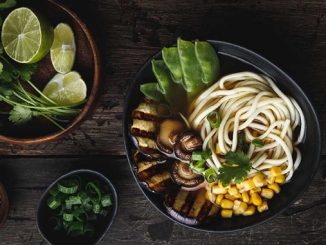
Mushrooms! In 2020, I picked all of the wild mushrooms we served at the restaurant. We were picking morels from Oliver, Skagit Valley in Hope, chanterelles, porcini, and pine mushrooms from the Sea to Sky area and Boston Bar. We were driving and putting the miles on, but BC has such a long and abundant mushroom season that we almost always have something mushroom-related on the menu.
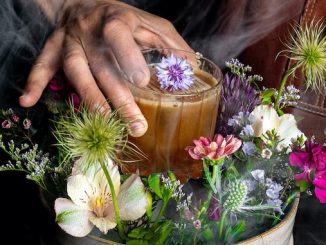
Published’s mother flavours on our menu are wild mushrooms, seaweed and kelp—I’ll be going up to the Sunshine Coast to harvest 200 kilos of kelp to pickle for the year—elderflower and elderberry, which we pickle and make into vinegar and cordial. We have currants, and we love black currant leaf and black currant wood as well. We pickle roses and make rose vinegar for the year. Spruce, Douglas fir, grand fir—we make oil out of the needles. Those are our mother’s flavours on the menu.
If someone was visiting Vancouver for the first time, what food experience would you insist they try?
Farmers’ markets in abundance in the summer—it’s a magic time with tomatoes, stone fruit, mushrooms, Chilliwack corn. Cook that up for a salad in the summer, and it’s the best thing you’ll ever eat.
The Fishman in Richmond—their sour cabbage lingcod soup is a revelation. Geoduck in several services. Bring a bottle of champagne and have dim sum. Sunswa is on Main Street. My go-to in my neighbourhood is Pink Pearl for dim sum. I was devastated when Mr. Red shut down.
Vancouver is good for everything.
What restaurants, cafés, or hidden gems in Vancouver do you personally love to eat at when you’re off-duty?
Anh and Chi. Dachi right by my house—great sake. Juke. By Princeton, there are some good spots. Niwa, Pink Pearl, Cindy’s Palace for hot pot. There are crazy, weird places on Kingsway—Happy Tree House BBQ or something like that.
How do you think the dining scene in Vancouver is different from other Canadian cities?
It’s a melting pot. Vancouver is a small big city—we don’t necessarily have the population density of somewhere like Toronto, but there’s still so much. Ethiopian, Malaysian, there’s so much available. We have amazing duck from Fraser Valley. We have live Dungeness crab, spot prawns, geoducks floating around in the tank.
Where do you like to shop for ingredients locally — farmers’ markets, specialty shops, or a particular supplier?
I’m super lucky that I work with a dozen local farms, and a lot of them do sell at farmers’ markets. Cropthorne Farm, Glorious Organics… So many. North Arm Farm up in Pemberton. I’ve been working with some of our local farmers for 15 years.
Beyond food, what makes Vancouver special to you as a place to live and work?
I moved here 17 years ago and never looked back. Again, we have a growing season that is brilliant— right now, during this interview, it is mid-January, and it’s blue skies, lush and green. It’s one of the best dining places in the world, and I can be in the mountains and at the beach the same day. I can get on the highway minutes from my place and get deep in the mountains within a short amount of time. There’s so much to see and explore.
What’s next for you and your restaurant here?
Published is entering its sixth year, so we keep reminding people we’re progressive and continuously improving. There’s a trendy, dynamic energy here, and I’m always thinking: How do I create opportunities for my people in this space? How do I keep my team engaged? I want to provide opportunities for their own creativity. We’re always looking five years ahead—how do we keep people excited?
I’d like to open another restaurant that’s tasting menu only and more focused, eliminating the gap between cooks and the guests. A deeper connection between guests and the people cooking the food.