Flavourful Science is a non-profit STEM outreach initiative that delivers hands-on, food-based workshops to make science education engaging, accessible, and inclusive for youth, focusing strongly on promoting equitable learning opportunities. We spoke with Norbert Banyi, Founder of Flavourful Science, to learn more about the organization’s inspiration, its impact, and its mission to make STEM education more accessible for all students.
Describe your charity/non-profit/volunteer work in a few sentences.
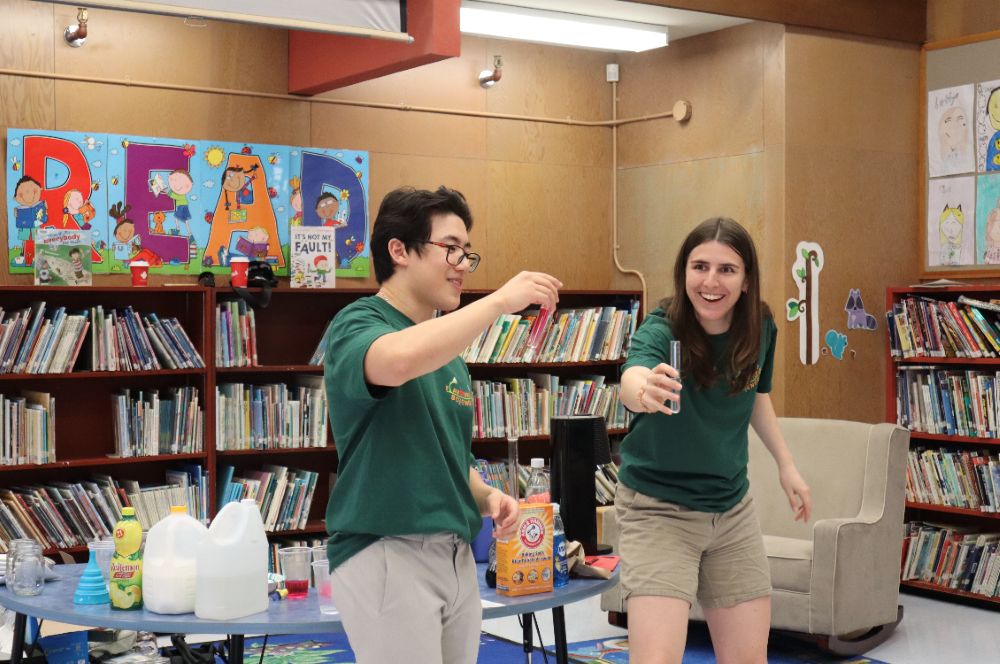
I founded Flavourful Science, a non-profit STEM (Science, Technology, Engineering, and Math) outreach initiative that aims to engage youth through hands-on, food-based workshops. Free interactive lessons are hosted primarily in classrooms, where we make complex scientific concepts fun, accessible, and memorable for students. A core part of our mission is promoting equitable access to engaging STEM education, especially for youth who may not otherwise have the same opportunities to participate in enrichment programming. The organization has reached thousands of learners in both urban and rural settings, mobilized a strong volunteer team, and secured funding to expand inclusive, creative science education.
What problem does it aim to solve?
Flavourful Science aims to address unequal access to engaging and inspiring, hands-on STEM education for youth. Many students, especially those in under-resourced communities, do not get enough opportunities to explore STEM in a way that feels interactive, approachable, and exciting. By using food-based workshops, taught by diverse university student volunteers, the organization helps make STEM learning more accessible, memorable, and inclusive, while fostering curiosity and confidence in young learners.
When did you start/join it?
I started Flavourful Science when I began university in 2019, inspired by my experience working at a free cooking summer camp for underserved youth in my hometown of Surrey. That experience showed me how meaningful hands-on enrichment opportunities can be for kids. Later, seeing how many of my peers at university had grown up with access to similar programs made it even clearer that not all youth are given the same opportunities to engage in STEM. I created this initiative to help address that inequity by providing accessible, engaging, food-based STEM workshops for youth who might not otherwise have access to these experiences.
What made you want to get involved?
I was motivated to get involved after working at a free cooking summer camp for underserved youth in Surrey and seeing how impactful those kinds of hands-on learning experiences could be. Later, when I started studying science at university, I realized that many of my peers had grown up with access to similar enrichment opportunities, while many other youth had not. That made me want to create something that could help make engaging STEM experiences more accessible and equitable for students who might otherwise miss out.
What was the situation like when you started?
When I started Flavourful Science, it was very grassroots. I was running workshops myself and recruiting any volunteers I could to help teach in classrooms. What began as a small local initiative has since grown into a much larger organization with a broader reach and more structured programming.
How has it changed since?
Since then, Flavourful Science has delivered over 373 hours of interactive workshops, engaged more than 7,600 students, visited over 250 classrooms, and involved more than 60 volunteers. We have developed 6 different one-hour STEM workshops and delivered them to 52 classrooms, reaching about 1,250 rural and Indigenous students in Lillooet, Nelson, Quesnel, and Williams Lake with the help of 13 volunteers. We also launched a choking prevention workshop that has now been delivered to more than 950 children in Vancouver. The organization has also expanded from a single UBC Vancouver branch to additional branches at SFU, serving the Fraser Valley, and in Ottawa. Beyond in-person programming, our Flavourful Summer of STEAM and Don’t Choke series in partnership with SciFiles have reached over 19,000 views worldwide.
What more needs to be done?
What still needs to be done is continued expansion, both geographically and in the scope of our programming. We are working to increase our reach in rural communities through teacher-friendly kits and classroom resources that can be delivered beyond the communities we can physically visit. We also hope to open new branches in places like Toronto and PEI, while continuing to build new health literacy workshops for youth. One program we are especially excited about is “Building Better Bones,” created by Medical Student Diorah Ozoh, which teaches children about bone health and the importance of habits formed early in life. Since peak bone density is achieved in early adulthood, introducing these concepts early has the potential to promote healthier aging and prevent significant morbidity in the future.
How can our readers help?
People can support this work in several meaningful ways. They can contribute through spreading awareness by sharing the initiative within their communities, donations, and connecting us with potential partners or sponsors. They can also support broader change by advocating for programs and policies that improve equitable access to resources and opportunities for youth.
Do you have any events coming up?
We offer our programming on an ongoing basis and would love to come to your classroom. You can connect with us through our website or by email using the contact information listed there.
Where can we follow you?
PAY IT FORWARD: What is an awesome local charity that you love?
Science World has been an important supporter of Flavourful Science. With their support, we were able to carry out some of our earliest classroom visits, and they also helped make our first rural outreach trip to Lillooet possible!