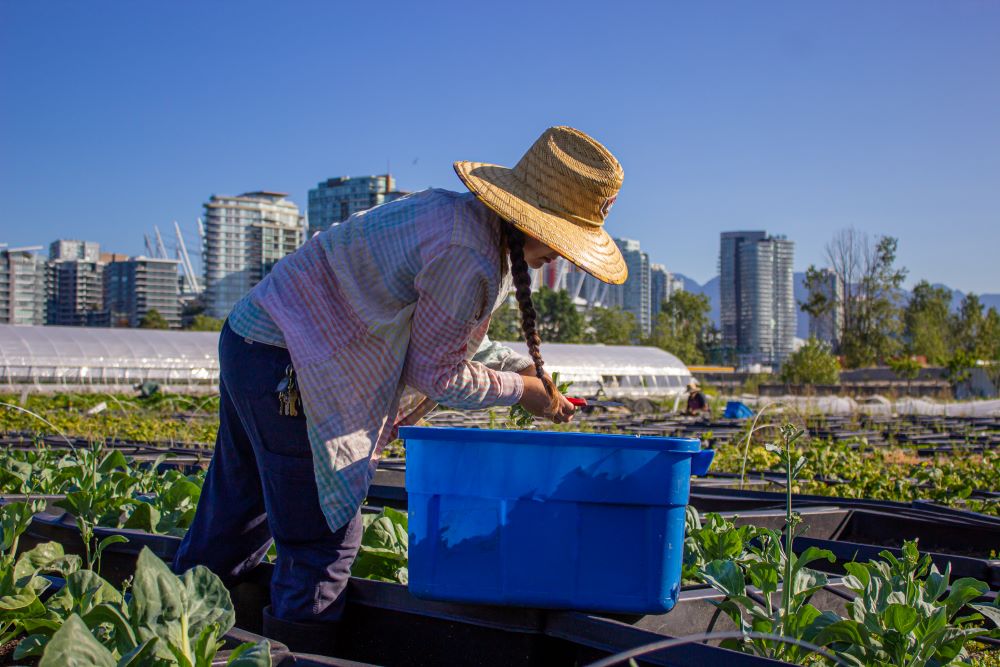
Since 2009, Sole Food Street Farms has been repurposing unused urban land to grow food. Not only does Sole Food Farms provide fresh and nutritious food to the community, but they also provide employment for marginalized residents of Vancouver’s Downtown Eastside, which was a primary goal from their earliest days. Visitors to the farm are welcome for the weekly farmgate market every Wednesday, which runs until mid-October. We spoke with Heather Farmer, Executive Director of Sole Food Street Farms, to learn more.
Describe your charity/non-profit/volunteer work in a few sentences.
Sole Food Street Farms transforms vacant urban land into productive farms that provide employment and training for people in Vancouver’s Downtown Eastside who are facing barriers to stability and work. We grow over 30,000 pounds of fresh food annually, offering meaningful jobs, agricultural training, and a supportive community. Since our founding in 2009, we’ve grown over a million pounds of produce and paid more than $2 million in wages to individuals in need.
What problem does it aim to solve?
Sole Food was founded in 2009 by Downtown Eastside community members, alongside founders Michael Ableman and Sean Dory, to address the deep social and economic marginalization faced by people in Vancouver’s inner city. Our ’employment first’ model provides paid work, a sense of purpose and belonging, and access to fresh food—all while greening the city and modelling innovative, production-scale urban agriculture. We employ and feed people who have experienced poverty, homelessness, addiction, mental health challenges, and incarceration.
When did you join?
I joined the team in the winter of 2022 as Program Director, and I’m now in my fifth growing season with the farm. After the retirement of our founder, Michael Ableman, I stepped into the Executive Director role last year as we celebrated our 15th season farming the city.
What made you want to get involved?
Like many others, I became captivated by Sole Food while biking past and peeking through the fence, wondering what was going on beyond it. It was clear to me that the farm was growing something special: dignified employment, hyper-local produce, and real community. It’s the kind of inclusive, grounded space our city needs more of.
What was the situation like when you started?
I knew I was stepping into something special. Sole Food was already a leader in urban farming and social enterprise, as one of the largest programs of its kind in North America. The farm was known for growing artisanal, high-quality produce for some of Vancouver’s best chefs, thanks to the incredible work of our farmers. But like many nonprofits, we were doing a lot with limited resources. The pandemic had intensified existing challenges for the community and our organization, and there was renewed urgency around food security, connection, and safe community spaces.
How has it changed since?
In recent years, we’ve grown our team to offer more jobs, expanded wraparound support for our farmers, and worked to make our produce more accessible to the community. We’ve also recommitted to our core mission: creating meaningful, long-term employment for individuals facing systemic barriers.
Importantly, we’re now in active dialogue with the City of Vancouver to secure long-term land tenure so this vital work can continue for generations. Since our beginnings, we’ve faced the uncertainty of short-term leases. Last year, we planted asparagus crowns—a quiet but powerful act of trust. Asparagus takes several years to establish, but once it does, it can produce abundantly for up to 15 years. It’s a living investment in the future we’re working to grow.
What more needs to be done?
Our next chapter is all about realizing the full potential of this model, starting with securing long-term access to land. Urban farms like ours deserve permanence in city planning. Alongside land security, we need stable, multi-year funding to continue providing supportive employment and training. That means growing our donor base, strengthening partnerships, and raising awareness about the role urban agriculture can play in social inclusion, climate resilience, and food justice. Sole Food creates stability for people who haven’t always had it—and to keep doing that, we need it ourselves.
How can our readers help?
While our produce sales help sustain us, they don’t cover the full cost of the support we provide. That’s where community comes in! Please consider donating and becoming a monthly sponsor to help fund a farm position.
Do you have any events coming up?
Every Wednesday until mid-October, we host our farmgate market from 12–6 p.m. at 299 West 1st Ave. With tomatoes and summer crops in full swing, it’s the best time to visit.
This fall, we’ll be hosting our 3rd annual Gleaning Day—a joyful, community-powered harvest where volunteers help weed, pull crops, and gather the final bounty. The gleaned produce is shared at a free produce market, with all remaining food donated to local food security organizations in the Downtown Eastside.
Where can we follow you?
We’d love to stay connected! Follow along for farm updates, volunteer days, and behind-the-scenes stories:
Website | Instagram | Facebook
PAY IT FORWARD: What is an awesome local charity that you love?
We love Saige Community FoodShare. Saige runs a food bank and community kitchen in East Vancouver that serves thousands of people as a two-spirit, trans, and gender-diverse safe space. They specialize in fresh food recovery, with over 90% of what they distribute coming from local donations. We’re proud to partner with them and direct our own food donations their way.