
For more than two decades, Chad Leaman has been at the forefront of using technology as a force for inclusion. As the Director of Innovation at the Neil Squire Society, Leaman leads initiatives that empower Canadians with disabilities through assistive technology, digital literacy, and employment programs. Based in Burnaby, the national non-profit serves over 12,000 people annually, helping them access the tools and support needed to live and work more independently.
Describe your charity/non-profit/volunteer work in a few sentences.
The Neil Squire Society is a Canadian non-profit that uses technology, knowledge, and passion to empower people with disabilities. Through programs in Assistive Technology, Digital Literacy, Employment, and Innovation, we help people access the tools, skills, and support they need to live, learn, and work more independently.
Last year, we served over 12,000 Canadians with disabilities and had over 9,000 volunteers help create assistive devices.
What problem does it aim to solve?
Assistive technology is our superpower that removes barriers for people with disabilities. We aim to remove obstacles that prevent individuals from fully participating in work, education, and community life.
For many, that starts with access to the right technology — whether that’s an adaptive computer setup, a custom gaming controller, or an affordable switch that allows a child to play with a toy.
When did you start/join it?
I joined Neil Squire as a summer student tutoring basic computer skills in 2002.
What made you want to get involved?
I was a computer science student at SFU and realized I was never going to be the biggest nerd. But I’ve always believed in the power of technology to change lives.
Seeing how technology and the internet created new opportunities for inclusion during that summer job inspired me to focus on how technology could be a force for social good.
What was the situation like when you started?
When I started, this was the “Ask Jeeves”/Yahoo Email era of the internet. Assistive technology was far less accessible, both in awareness and affordability.
Devices were often expensive, closed-source, and out of reach for many families and organizations. There was also less understanding of how technology could be customized for inclusion.
How has it changed since?
Today, thanks to open-source design, 3D printing, and community collaboration, assistive technology is more available than ever.
Our Makers Making Change program, for example, has connected thousands of volunteers, engineers, students, and corporations to build affordable devices that are shared freely online and donated to people who need them.
We’ve gone from helping a few hundred individuals to reaching tens of thousands across Canada and beyond.
What more needs to be done?
Employment rates of people with disabilities still lag nearly 20 points behind the rest of the population. And while access to assistive technology has improved, the digital divide remains a major issue.
We need continued investment, public awareness, and inclusive design across all sectors to ensure that accessibility isn’t an afterthought — it’s a standard.
How can our readers help?
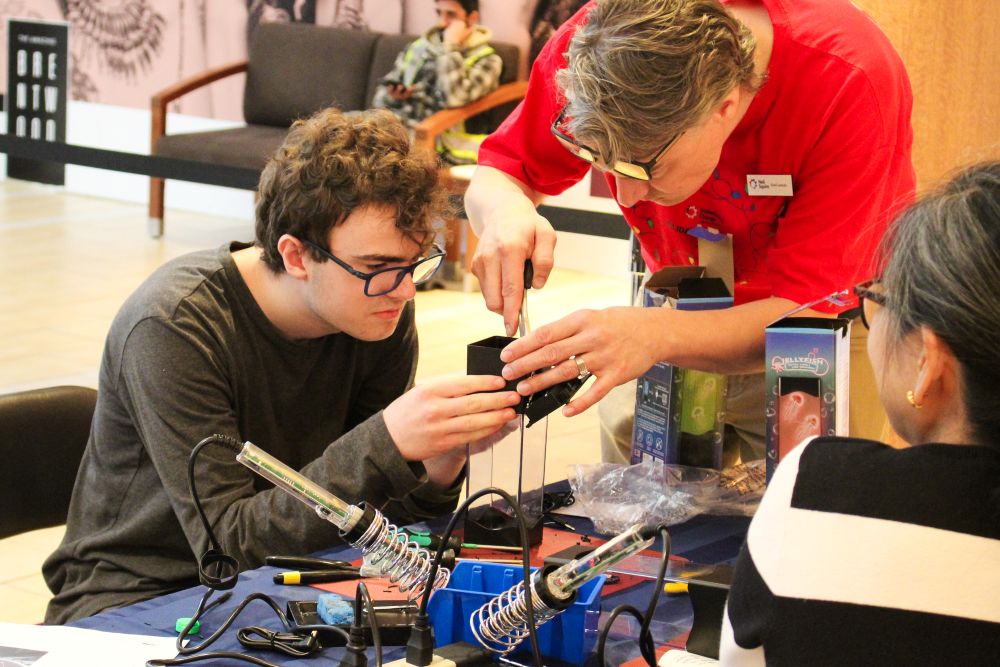
Right now, readers can join or support our Hacking for the Holidays campaign. Every winter, volunteers across Canada learn basic electronics skills to adapt toys and build accessibility switches for children with disabilities.
A commercially adapted toy can cost over $300, but we can make one for less than $40. You can donate, volunteer, or host a toy-adapting event — and make the holidays brighter for a child who might otherwise be left out of play.
We have a goal of building and donating 2,000 adapted toys and access switches in time for Christmas.
Learn more or give here.
Where can we follow you?
Website | Makers Making Change | Facebook | Instagram | LinkedIn
PAY IT FORWARD: What is an awesome local charity that you love?
I’d like to highlight the BC Technology for Learning Society, which refurbishes over 8,000 computers each year and provides them to schools, students, low-income households, non-profits, libraries, and more.
Most of the refurbishing work is done by youth on paid work experience, meaning the organization trains the next generation of tech workers, makes a significant environmental impact, and creates affordable digital access across B.C.
Learn more here.