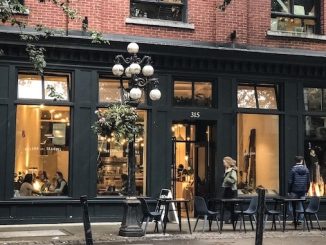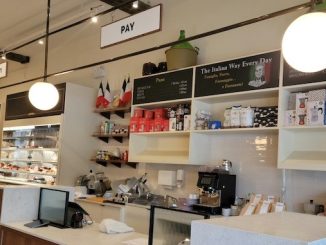
Casa de Nata opened their doors for the first time on Saturday, April 12. The family business that has been selling their deliciously flaky Portuguese custard tarts at farmers markets in Vancouver since 2020, now has a real brick and mortar storefront, including a door to open to the public.

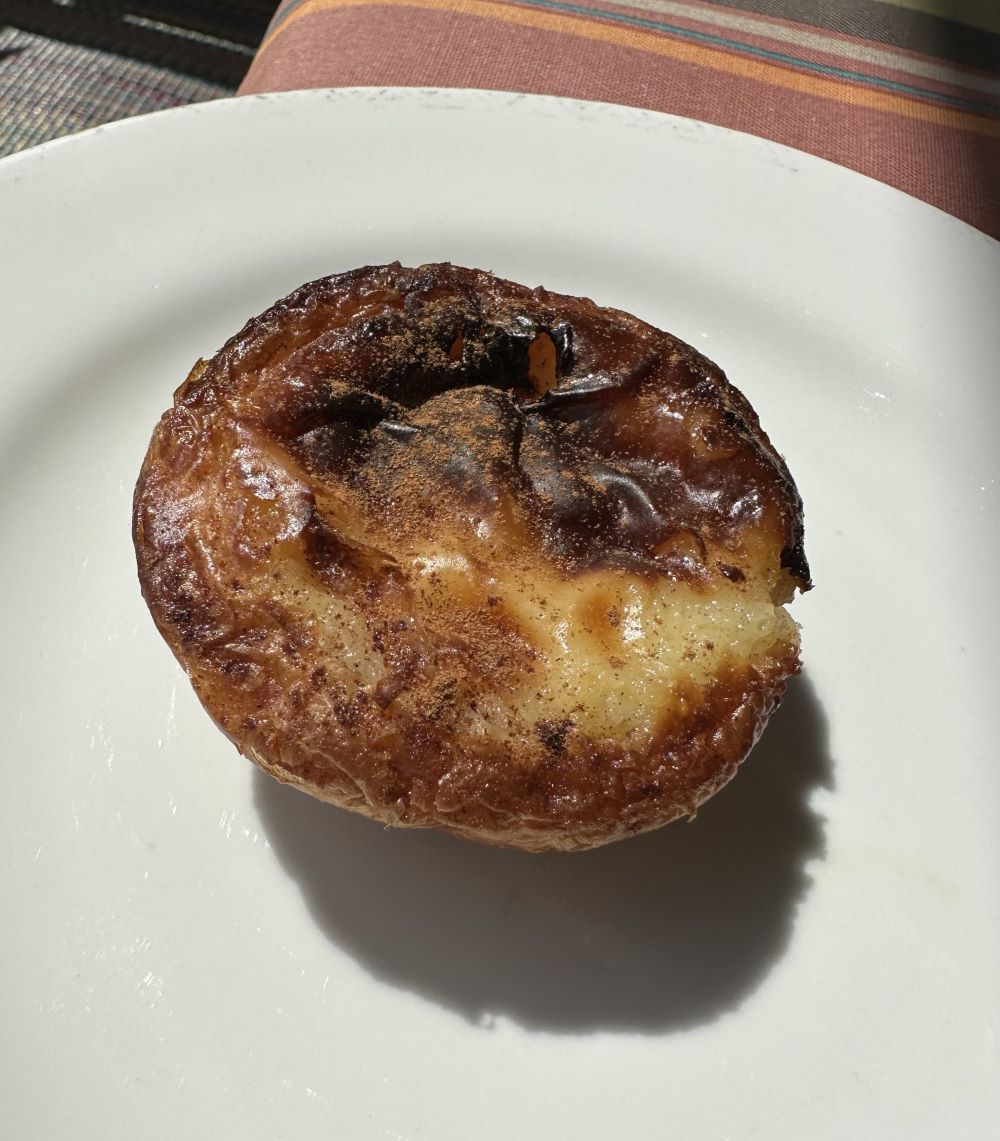
Pasteis De Nata
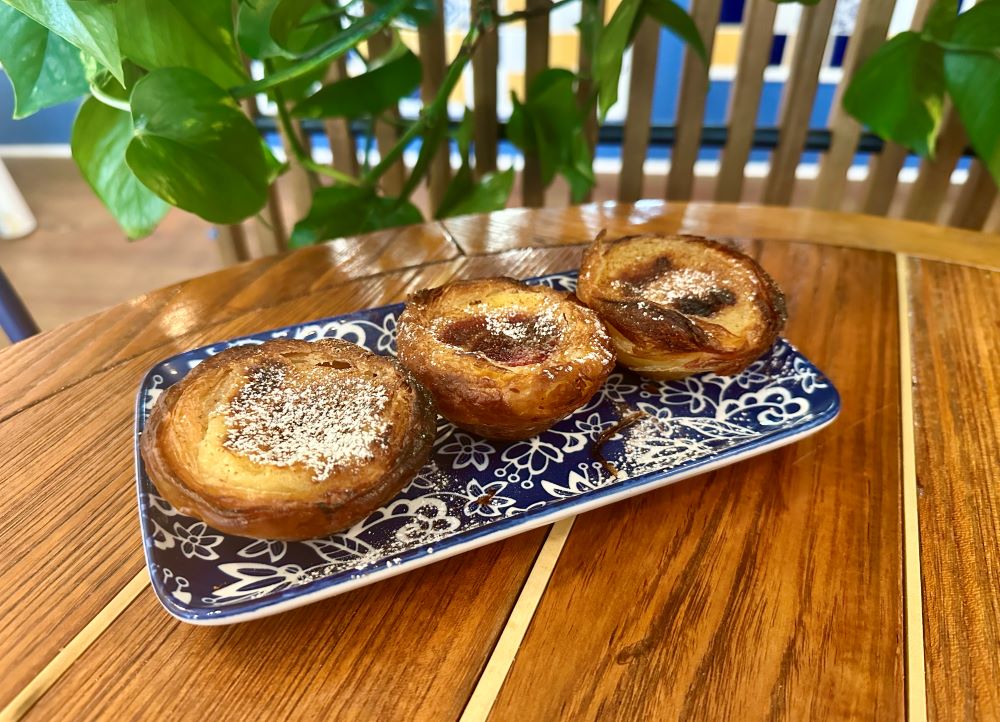
I first discovered Casa de Nata at the Mount Pleasant Farmers Market. I grew up eating Chinese egg tarts and was curious about how the Portuguese version differed. The origins of both are colonial. Custard tarts have been made in England and France for thousands of years, but they took off in Portugal in the 1800s. The story goes that monks were using egg whites to starch their collars when they realized they could use the leftover yolks to make delicious pastries. Now, they are a symbol of Portuguese food culture.
One of the big differences between the Portuguese nata and Chinese egg tarts is the crust. Chinese egg tarts have a more crumbly pie-like crust. Portuguese natas have a laminated, flakey crust similar to a croissant dough. Another difference is that the top of Portuguese nata is usually torched like a crème brûlée, giving it a deliciously dark caramel flavour.
Variations and a Vegan Option
While Stephanie and Jeremiah Benskin, the husband and wife team behind Casa de Nata, have mastered the original, they have also introduced a raspberry flavour, and have plans for seasonal flavours like egg nog. For those looking for a plant-based option, Stephanie spent six months fine tuning the recipe of her impressive vegan “egg” tarts.
Jeremiah acknowledges how challenging the tarts can be. He tells me they are “very finicky, very hard to make,” and that “you kind of have to be at one with the nata.” Stephanie adds, “You can’t cut corners.” Their diligent efforts are evident in the quality pastries they produce and in their success so far.
A Casa for de Nata
Opening a restaurant space had long been the plan for Casa de Nata. Jeremiah shares, “We’d been looking for the past couple of years to see if we could find something, and we actually live in the neighbourhood, so we wanted something that was not so much of a commute.” Jeremiah and Stephanie have lived in Gastown for the past fifteen years. Balancing running the business with raising their two young children is a priority. So, to start, they will be open from 9 am to 4 pm. “We’re doing a juggling act,” admits Jeremiah, “playing it by ear.”
The hours are perfect for offering morning coffee and fresh tarts, as well as lunchtime soups and sandwiches. The Portuguese community of Vancouver must surely be rejoicing because options for Portuguese classics like bifana or caldo verde were limited. In fact, it was requests from hungry customers that prompted Casa de Nata to start experimenting. Stephanie says, “We just get messages, can you make this, can you make that.” The pork bifana on the menu was first tested at farmers’ markets and special events. “We got really good feedback from doing the bifana,” shares Stephanie. It has been tested by audiences who know the real deal.

Casa de Nata Does Portuguese Street Food
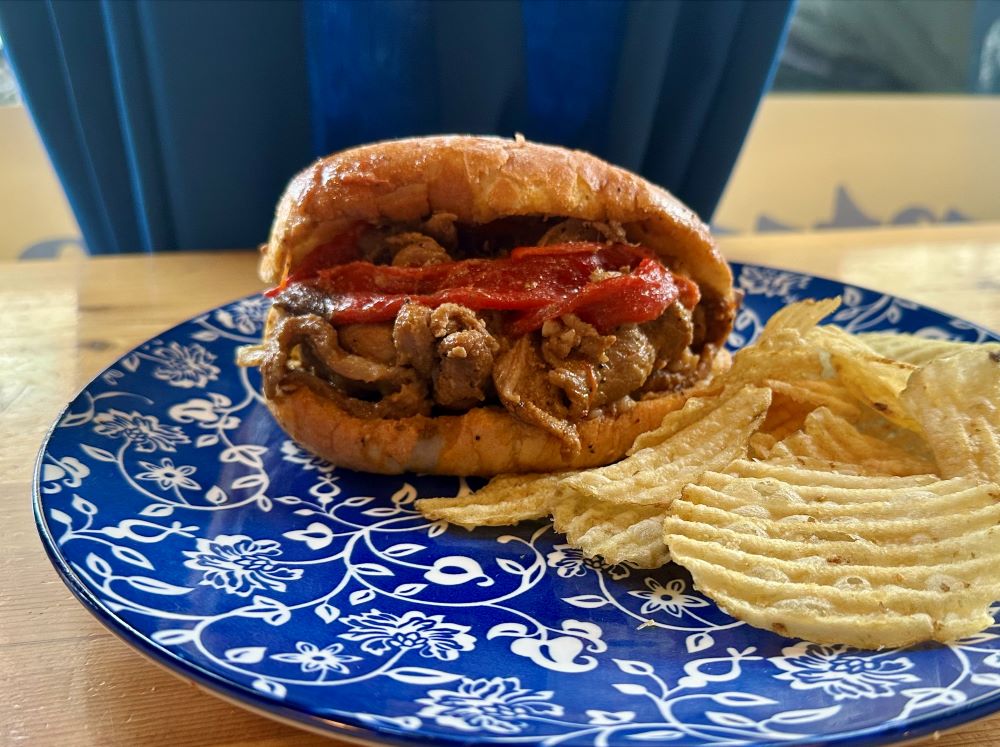
Succulent and sloppy in the best way, the bifana starts with pork marinated in white wine and garlic. When it hits the lightly floured papo secos bun, all of those delicious juices are immediately absorbed. You can get yours topped with red peppers as well as a fried egg. The egg is an optional addition for the Prego sandwich as well. So called because ‘prego’ means ‘nailed’ in Portuguese, referring to how the sliced garlic is nailed into beef when it is being tenderized.
Casa de Nata’s vegetarian sandwich option puts a spin on a Portuguese classic. A Francesinha is typically made with an assortment of hot meats such as steak, ham, or sausage, but this one will feature an assortment of vegetables instead.

Stephanie also feels the Portuguese pressure to have a cod dish on the menu, either a sandwich or more traditional plated dish. However, the plan is to start small and grow, depending on what’s popular, requested, or seasonal. Stephanie says they will, “start with a smaller menu and see how it goes, see what people are gravitating towards.” So, stop by and sample what Casa de Nata has to offer. Try something you’ve maybe never had in Vancouver before, and let them know if you have any Portuguese favourites that you’ve been craving.