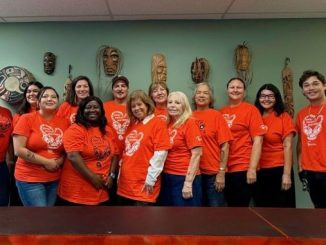
In Vancouver, meaningful change is often driven by those willing to turn personal experience into collective impact. Andrea Paquette, President and Co-Founder of the Stigma-Free Mental Health Society, is doing exactly that—leading a movement to reshape how Canadians understand and talk about mental health.
Founded in 2016, the organization is dedicated to improving mental health literacy and reducing stigma through accessible education, with a particular focus on youth and rural communities. What began as Andrea’s personal journey following her bipolar disorder diagnosis has evolved into a nationwide effort to create safer, more compassionate spaces for conversation and support. At a time when silence and misunderstanding once dominated, her work continues to help shift the narrative toward openness, connection, and real change.

Describe your charity/non-profit/volunteer work in a few sentences.
The Stigma-Free Mental Health Society is a Canadian charity dedicated to improving mental health literacy and reducing stigma through education and training, with a strong focus on youth and rural communities.
What problem does it aim to solve?
The Stigma Free Mental Health Society addresses the ongoing lack of mental health understanding and the stigma that prevents people from reaching out for support, especially among youth and in rural communities. Many individuals still experience judgment or silence when it comes to mental health, which can lead to isolation and delayed help. By providing accessible and relatable education and tools, we help create spaces where mental health is understood, conversations feel safe, and people feel supported to seek help when they need it.
When did you start/join it?
I founded the Stigma Free Mental Health Society in 2016 as a continuation of my earlier work in mental health advocacy, which began in 2010 when I founded the Bipolar Disorder Society of BC. The organization later evolved into the Stigma Free Mental Health Society, which I co-founded with Dave Richardson.
What made you want to get involved?
I got involved in mental health advocacy after being diagnosed with bipolar disorder in 2005. At the time, I experienced firsthand how much stigma and misunderstanding still existed, and how isolating that could feel. I knew there had to be a better way to create understanding and connection. What started as a personal journey to make sense of my own experience grew into a passion to help others feel less alone and to change the conversation around mental health in a more honest and compassionate way.
What was the situation like when you started?
When I first started this work in 2010, the conversation around mental health was very different than it is today. There was far more stigma, and much less openness. People were not talking about their experiences, especially publicly, and it often felt like something that had to be hidden.
Even something as simple as searching mental health online could be discouraging. The images and information were often negative, clinical, or even frightening, which only added to the sense of isolation. There was very little that felt relatable, hopeful, or human.
At that time, there was a real gap in understanding and education. That is what pushed me to get involved. I wanted to help create a space where people could see themselves reflected in a more compassionate and real way, and where conversations around mental health felt safe and accessible.
How has it changed since?
Since then, there has been a noticeable shift. Mental health is talked about more openly, and more people are willing to share their experiences, which has helped reduce some of the stigma. Schools, workplaces, and communities are starting to recognize the importance of mental health in a more meaningful way.
There are also more resources available now, and the language around mental health has become more compassionate and understanding. People are beginning to see it as part of overall health, rather than something separate or hidden.
That said, there is still a lot of work to do. Stigma has not disappeared, and many communities, especially in rural areas, still face barriers to access and understanding. That is why continuing this work remains so important.
What more needs to be done?
While progress has been made, there is still a need for more consistent and accessible mental health education, especially for young people and in rural communities. We need to move beyond awareness and focus on true understanding, where people feel confident supporting themselves and others.
More open and honest conversations are still needed, along with safe spaces where people can share without fear of judgment. Education systems, workplaces, and communities all have a role to play in normalizing these conversations early and often.
We also need to ensure that resources are not only available, but relatable and easy to access. When people can see themselves reflected in the information and feel understood, they are more likely to reach out.
Ultimately, reducing stigma requires ongoing effort, compassion, and a willingness to keep listening and learning from lived experience.
How can our readers help?
Readers can help by being part of the shift toward understanding and compassion. One of the most impactful ways to get involved is by bringing our no-cost programs into schools, helping ensure that young people have access to mental health education early on.
For those in rural communities, taking part in peer support training can make a meaningful difference, creating local networks of support where resources are often limited.
On a personal level, it also comes down to how we show up for one another. Being kind, listening without judgment, and having open conversations about mental health all help reduce stigma. Small actions can have a big impact when it comes to making people feel seen and supported.
Do you have any events coming up?
Yes, we have an exciting event coming up called Illuminate: Champions for Change, taking place on April 30, 2026, in Vancouver. This special fundraising event brings together community leaders, advocates, and organizations who are working to improve mental health and strengthen communities.
The evening is focused on storytelling, connection, and celebrating individuals and organizations who are creating meaningful change. It is also an opportunity to raise awareness and support programs that address mental health, reduce stigma, and tackle issues like loneliness.
Events like Illuminate are important because they create space for people to come together, share experiences, and be part of a larger movement toward understanding and compassion.
Where can we follow you?
Instagram | LinkedIn | TikTok | Facebook
PAY IT FORWARD: What is an awesome local charity that you love?