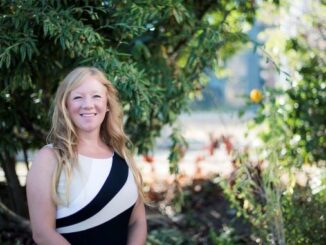
Vivian Cheung grew up in East Vancouver as an equity-denied youth in a single-parent refugee household, navigating cultural stigma around environmental careers while financial pressures and family expectations limited her ability to pursue the competitive sector she cared about. That lived experience now fuels her work as Fundraising & Communications Manager at Environmental Youth Alliance, a Downtown Eastside nonprofit founded in 1989 by local high school students to build environmental stewards from communities systemically excluded from green careers, despite being disproportionately harmed by environmental crises.
Describe your charity/non-profit/volunteer work in a few sentences.
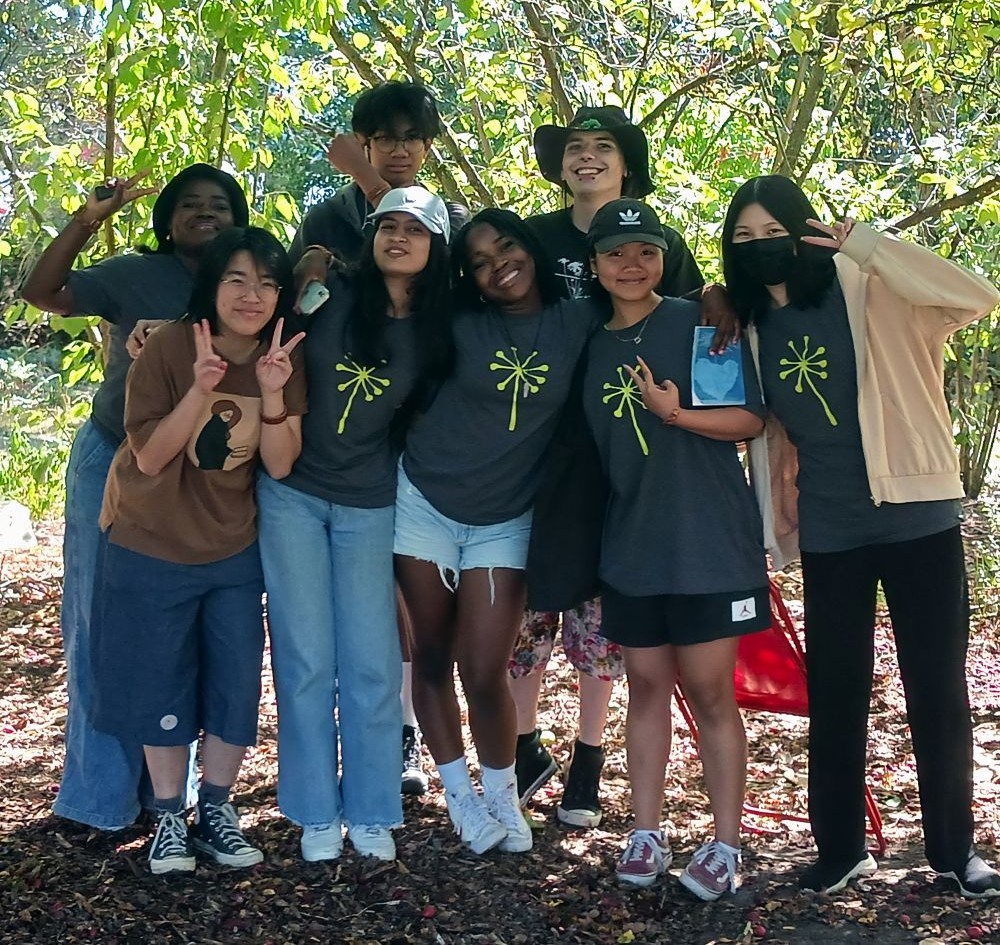
Environmental Youth Alliance (EYA) is a nonprofit based in Vancouver’s Downtown Eastside. Our mission is to support youth from equity-denied communities to develop the skills and confidence to become environmental stewards, which includes youth who identify as Indigenous, Black, People of Colour, 2SLGBTQIA+, living with a disability, and/or targeted by other forms of systemic oppression. To achieve this mission, we provide free land-based environmental education and paid employment training programs.
Our programs centre on three themes – native plant horticulture, ecological restoration, and plant medicine. All programs are led by trained youth facilitators who identify as BIPOC and supported by Indigenous Elders and Knowledge Keepers who share land-based cultural teachings with youth participants. This ensures that our educators reflect the communities we serve and creates positive role models for our youth.
What problem does it aim to solve?
We recognize that youth from equity-denied communities are disproportionately harmed by environmental crises but are often systemically excluded from environmental advocacy and careers. Our programs honour and centre the voices of youth from equity-denied communities in land stewardship and create spaces where youth can pursue their passions and apply their knowledge and lived experiences to care for the land. Through this, we aim to support a more equitable and inclusive environmental movement that recognizes the intersections of social and environmental justice.
When did you start/join it?
EYA was founded in 1989 by local high school youth, and I joined in June 2024.
What made you want to get involved?
As an equity-denied youth myself who was born and raised in East Vancouver, I recognized and experienced the need in our community for programs like these to build up young environmental stewards. Growing up in a single-parent home of refugees, pursuing an environmental career was also met with cultural stigma and pressure, while expectations to support my family during my studies limited my time and financial resources in the midst of an already competitive sector.
I recognized that EYA was playing an important role in addressing this need, leading together with youth in underrepresented communities in impactful and practical ways. As a racially-diverse and youth-centred organization, I wanted to get involved in EYA to support fellow youth also experiencing barriers in accessing opportunities for environmental stewardship, training, community and connecting to the land, something I wish I had sooner. Now, with the skills and experience I’ve developed through years of working within environmental nonprofits, I’m grateful to share what I can give to our community and be part of moving that change forward.
What was the situation like when you started?
In addition to barriers existing within equity-denied communities, youth mental health continues to be on the rise as we navigate through the post-pandemic world, climate change, and world events. The reality is that living in the city, it’s difficult for us as adults to access community and green spaces, let alone the barriers urban youth are facing when looking for opportunities to reconnect and facing uncertainty about the future.
What we’ve seen and continue to learn is that getting youth outside and giving them leadership opportunities to access community and nature is so important in combating social isolation and climate grief. It’s not just research, but even our youth report the change that happens when given meaningful ways to connect with each other and nature. When surveying high school youth in our programs, 94% of youth felt more connected to other youth and 95% of youth felt more empowered to take action to protect the environment. Giving youth a seat at the table when it comes to leading in environmental stewardship and developing a reciprocal relationship with the land is crucial, not only their own mental health but also for the health of our communities in building confidence and connection.
How has it changed since?
In the past year, our team and programs have grown in response to the need and interest in our work. We have worked together with 800+ youth in environmental stewardship, and we engaged youth participants to seed and pot up 4400+ native plants that we shared with community groups and members, schools, Musqueam, Squamish, and Tsleil-Waututh Host Nations communities, and planted at our restoration sites. We are also excited for the return of our Roots and Shoots program to offer more youth opportunities to engage. With growing capacity and opportunities, we hope to create space for more equity-denied youth to access land-based education and employment training.
What more needs to be done?
Sustainable funding is an ongoing challenge to sustain and to grow our youth programs to reach more youth in equity-denied communities. To ensure programs are inclusive and accessible, one commitment is that EYA provides healthy lunches, bus tickets, and an honorarium to each youth. These are crucial to removing barriers and supporting full participation of youth from equity-denied communities. The honoraria motivates and supports youth to participate fully in the program and helps them to support their families, save money for school costs, and pay for basic necessities like groceries, clothes, and rent. It also acknowledges and honours the contribution they are making to restoring the local environment and improving their community.
The need for our programs continues to grow, and so it is the generosity of our community that allows us to continue our work and remove more barriers for more youth.
How can our readers help?
If you are in a financial situation to give, we encourage you to support our programs as either a one-time or a monthly donor. Learn more and donate here.
In addition, if you are or know a youth ages 14-25 from equity-denied communities looking to connect with nature, community, and skills to benefit their lives and steward the environment, I encourage you to check out our free land-based environmental education and paid employment training programs that are starting up again soon in the summer. More information on our website.
Where can we follow you?
Website | Instagram | Facebook | LinkedIn
PAY IT FORWARD: What is an awesome local charity that you love?
Urban Native Youth Association is doing awesome work in our community that folks should check out!