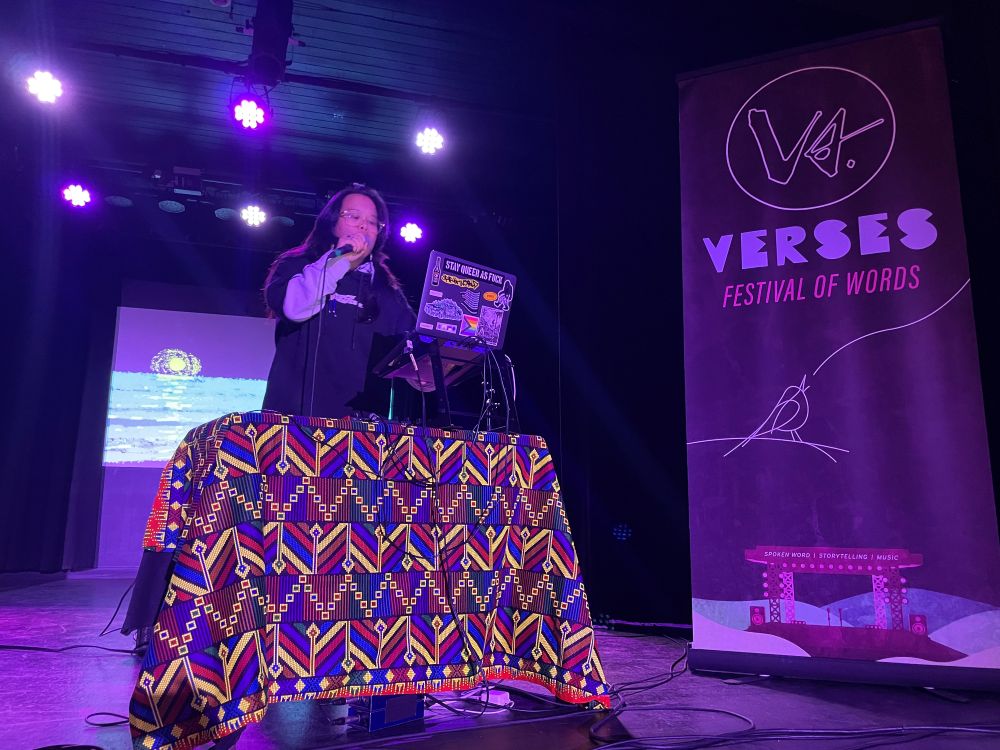
Johnny Trinh has seen firsthand what happens when people are denied a stage. As a Queer, Non-Binary, Asian, Neurodivergent artist, he spent years being turned away from acting roles before discovering that spoken word would welcome him where musical theatre wouldn’t. That experience now shapes everything he does as Artistic Director of Vancouver Poetry House—the largest spoken word non-profit arts organization in Canada—where the mission is as much about who gets to speak as it is about the art itself. From monthly poetry slams to the Verses Festival of Words, VPH has spent two decades building platforms for the poets, stories, and voices that everywhere else gets overlooked.
Describe your charity/non-profit/volunteer work in a few sentences.
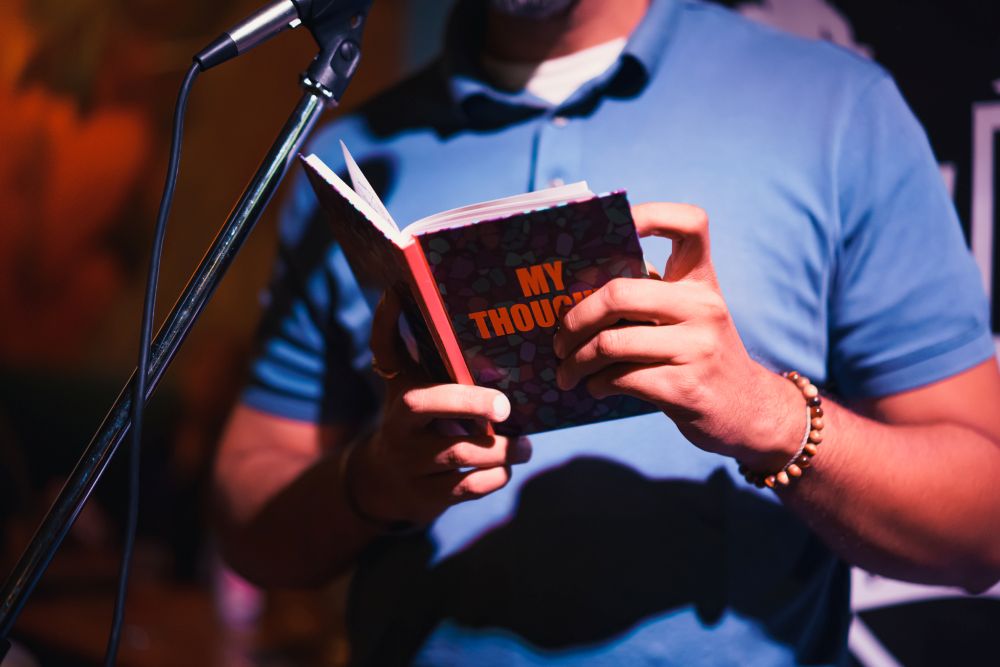
Vancouver Poetry House is the largest Spoken Word Non-Profit Arts Organization in Canada. Its mandate is to foster the practice of Spoken Word in all its forms and create spaces that support the growth of poetry and poets. VPH produces three main programs: monthly Vancouver Poetry Slams with an open stage to create opportunities for poets to get paid to perform, compete, and gather in community; WordPlay, an educational program that offers paid work to experienced poets leading workshops in schools and communities; and the Verses Festival of Words, the largest Spoken Word Festival in Canada, which hosts the Hullabaloo youth festival and the Canadian Individual Poetry Slam Championships.
In addition to these flagship programs, Vancouver Poetry House actively engages within the local arts community—co-producing work, partnering with other festivals and programs, providing professional development opportunities for artists, and curating artists for various commissions and programs across the region.
What problem does it aim to solve?
Vancouver Poetry House acknowledges that contemporary spoken word is rooted in Black culture and deeply embedded in the history of civil rights, social change, and amplifying voices that are otherwise silenced. VPH also recognizes that many cultures have a rich history of orality, oral traditions, poetry, and storytelling that are celebrated through its programs.
There are two main challenges VPH works to address: Spoken Word in all its forms creates an accessible practice for people to tell their own stories—many poets face real barriers, and Spoken Word provides a space to speak truth and feel heard. And professionally, poets are among the lowest-paid artists in Canada, with no clear career path, particularly for spoken word performers. VPH offers a platform to develop and nurture that practice.
When did you start/join it?
Vancouver Poetry House started as a grassroots organization and incorporated as a non-profit in 2005. I personally began engaging with the organization as a poet in 2016, took on various leadership roles over the following years, and became Artistic Director in 2022.
What made you want to get involved?
I began my artistic journey as an actor focused on musical theatre. In the late ’90s and early 2000s, there was very little work for me as a Queer, Non-Binary, Asian, Neurodivergent artist. Colleagues introduced me to spoken word, and I sat with many poets and writers who emphasized the importance—especially for racialized and marginalized people—of telling our own stories. So I began to write and perform as a poet. Every stage that rejected me as an actor welcomed me as a poet.
I began to study the history of the practice and learned how deeply poetry and writing can drive social change. I also concurrently hold the position of Executive Director of the Historic Joy Kogawa House, honouring the work of Joy Kogawa—whose writing and poetry were instrumental in the Government of Canada’s recognition and apology for the Japanese Internment. I experience firsthand, every day, the power of poetry to foster agency, freedom, and empowerment in people finding their voice.
What was the situation like when you started?
With the onset of COVID-19 and many other factors, numerous non-profit organizations shuttered or fractured. Leading up to COVID-19, Vancouver Poetry House underwent an anti-oppression audit with EUPHONY Equity and Inclusion Works, which detailed a history of systemic challenges around racism, accessibility, and lateral violence. As someone engaged with VPH during that period, I was one of many poets who experienced and witnessed harm. The situation was dire, with many unknowns about how to move forward. EUPHONY made many recommendations that have since been put into policy and practice.
How has it changed since?
VPH is now a BIPOC-led organization, with at least 50% of all leadership, board members, and staff identifying as QTBIPOC. Hiring practices have been actively reformed and made more equitable and sustainable. There has been a significant increase in focus on accessibility and inclusion, with many initiatives supporting the Deaf and Hard of Hearing community, a priority on mobility-accessible spaces, and major investments in technology to improve hybrid and livestream programming for remote audiences. VPH has also deepened its decolonization efforts, actively curating artists whose work speaks to reconciliation and challenging systems of oppression locally and globally.
What more needs to be done?
Over the past four years, we’ve had to mindfully reduce the scale of the Verses Festival for sustainability, fiscal responsibility, and to prevent burnout. What we need now is to continue building the foundation to grow again in 2027.
Each year of the festival has had its own theme reflecting where the community is. In 2023, as distancing measures lifted, the theme was Gathering Found Family Back Around The Table—because for so many in our spoken word community, gathering in poetry is gathering with family. In 2024, it was Learning from Each Other & Remembering Together—about fortifying relationships and honouring those who came before. In 2025, the theme was AMPLIFY—it was time to get loud and be heard. And in 2026, our theme is Intimate Dialogues. As global leadership trends further toward oppression, forced migration, and silenced voices, we look to the ways resistance is nurtured—through private conversations, direct passing of knowledge, and intimate dialogue. So many poets speak to histories of surviving oppression and trauma. These lessons are vital to prevent repeated harm.
How can our readers help?
Show up. Go out and listen to poets, attend shows, and support artists directly. You can also donate to Vancouver Poetry House and attend the festival. Everything this year is happening at Chill-X Studios in Vancouver. We have incredible global legends who have done so much for community, poetry, and civil rights in Canada. It will be a powerful festival full of stories, music, laughter, and celebration of words.
Where can we follow you?
PAY IT FORWARD: What is an awesome local charity that you love?
I want to be fully transparent: as mentioned, I am also the Executive Director of Historic Joy Kogawa House, so this may seem like a conflict of interest—but I can attest that any support or donation from this story will not benefit me personally in any way.
Historic Joy Kogawa House exists for two reasons. It provides a home for artists and writers, and over the past two decades, some of the world’s most prolific writers and important emerging voices have stayed at the house to work on major projects.
With full transparency: there has been a significant reconciliation process between Historic Joy Kogawa House Society, the City of Vancouver, and the Anglican Healing Fund for Japanese Canadians, facilitated by Kai Cheng Thom. This process helped both HJKH and the City of Vancouver take accountability and connect with survivor families from the Nikkei Japanese community who were harmed by Joy’s father, Gordon Goichi Nakayama, a former member of the Anglican Clergy who confessed to harming young boys during the internment. This history was initially unknown to me, and I later learned that the society—before my tenure as Executive Director—had omitted it in preserving the house’s history.
As part of our accountability commitments, Historic Joy Kogawa House now actively curates artists whose work speaks directly to survivorship, sexual assault recovery, consent, and challenging systems of power.
The house is currently facing a major financial need, with a dream to create a more accessible space so that all people can visit and learn about the histories connected to it. Especially now, as new global conflicts, forced migration, and internment continue, the work of Joy Kogawa is more relevant than ever—urging those in power to hear these stories and prevent further harm.