ME Therapeutics is a Vancouver-based company in the rapidly growing life sciences sector that is developing medicines that could be a game-changer for how we treat certain cancers. They are specifically targeting myeloid cells, a blood cell type that is a central player in the immune system. The company is charging toward the clinic for their lead antibody candidate and pursuing the engineering of immune cells in vivo to fight cancer, together with another Vancouver-based company NanoVation Therapeutics. Over the next year, ME Therapeutics plans to grow their R&D team, prepare for manufacturing and work towards important regulatory milestones—with the aim of entering the clinic in 2026

What does your business do?
ME Therapeutics is a biotechnology company developing therapies to treat cancers that are unresponsive to current treatments. We work in an area of cancer research called immuno-oncology. This is a relatively new area of research that harnesses a patient’s immune system to attack cancer. We are targeting key pathways in myeloid cell biology to address cancers that today do not respond well to other treatment approaches, like metastatic colorectal and ovarian cancers. We are in the R&D phase for our lead antibody and in vivo immune engineering candidates. We are working toward getting those into clinical trials by next year.
What made you want to do this work?
I am a scientist by training and have always been fascinated with our immune system’s role in disease progression and prevention. I received my PhD in Immunology from the University of British Columbia in 2006 and published my first scientific article over 20 years ago on the immune system and cancer. Back then, many were sceptical that immunology would ever be clinically relevant for the treatment of cancer. Today, it is one of the most active areas of research. After completing my post-doctorate at the Princess Margaret Cancer Center in Toronto, I worked at another biotechnology company before founding ME Therapeutics in 2014 to target myeloid cell biology for cancer.
What problem did you want to solve with the business?
The area of immuno-oncology we are focusing on holds promise to unlock the next wave of cancer treatments. Most current immuno-oncology approaches target cancer-killing T-cells, a type of white blood cell. However, these approaches face several challenges. One of these is that myeloid cells can actually suppress T-cells. Combining myeloid targeting with T-cell targeting may overcome this challenge.
Our partnership with NanoVation Therapeutics also holds the potential of overcoming another hurdle in the field, which is getting genetic therapies to the right areas of the body. We are working collaboratively with NanoVation to control how to engineer immune cells directly in the body to fight cancer safely and effectively.
Who are your clientele/demographics?
People with cancer today have limited treatment options. As I briefly touched on, while current immuno-oncology approaches have been remarkably effective in some patients, not all cancer types respond to them. Our lead candidate has potentially broad applications in cancer, including metastatic colorectal and ovarian cancers. These are cancers that, for the most part, are currently not treatable with other immuno-oncology approaches.
How does your business make money? How does it work?
We are still in the development phase, with a plan to bring our therapies to clinical trials in 2026. Typically, preclinical companies raise money through funding sources such as private investors, venture capital, government grants, partnerships, and licensing deals. ME Therapeutics is listed on the Canadian Security Exchange, and we are exploring an uplisting to a senior national securities exchange such as the Nasdaq or the New York Stock Exchange.
Where in the city can we find your profession?
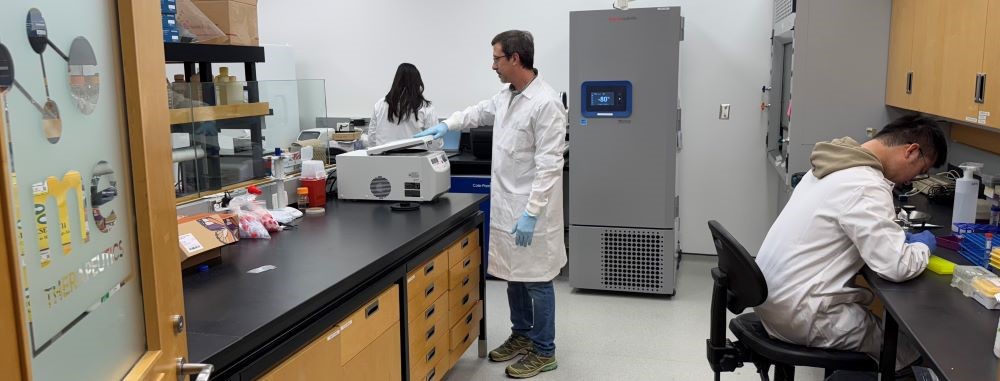
Our laboratory and office space is located at the University of British Columbia. We are in a building with other ventures spun out from the university, which means we are working alongside other companies at a similar early stage of development. One of these companies is our partner NanoVation, which has accelerated our ability to collaborate and advance our in vivo genetic engineering candidate.
What is the best question a prospective customer could ask a member of your profession when comparing services? Give the answer as well.
A great question would be how the immuno-oncology field is advancing as a whole and how myeloid cell-targeted therapies fit within the field to unlock more treatment options for cancer patients.
This area of research is flipping the script on cancer treatment. Because immuno-oncology drugs target the immune system rather than cancer, they can be used in multiple cancers. There is also a potential to combine them to improve the response rate.
Meanwhile, a few immuno-oncology companies are focused on targeting myeloid cells. The ones that are focused on myeloid cells are looking at different pathways. This means that the therapies we are developing, along with the therapies others in the field are working on, together have the potential to be a game-changer for cancer treatment.
What is the best part about what you do? What is the worst part?
I have been interested in the role the immune system plays in cancer for over two decades, so it is very rewarding to see immuno-oncology approaches now being used to treat cancer patients. I believe targeting myeloid cells is the next wave of immuno-oncology. It is exciting to be one of the first companies advancing research in the space—both with our antibody candidate and the in vivo genetic engineering-therapy we are developing in partnership with NanoVation.
Biotechnology is not always an easy business, and moving promising research from the laboratory to clinical trials comes with many hurdles. That being said, we are really motivated to get our therapies into the world so that cancer patients who otherwise have few options can receive the treatments they need.
What is your favourite joke about your own profession?
Did you hear about the two blood cells that met and fell in love? Alas, it was all in vein.
Where can we follow you?
Website | LinkedIn | Facebook | Instagram
PAY IT FORWARD: What is another local business that you love?
Our partners NanoVation Therapeutics! NanoVation is pioneering technologies that overcome barriers with an important drug delivery system called lipid nanoparticles (LNP). In the simplest sense, these are fat-like molecules that bring genetic medicines to the places we want them to go in the body.