
A Vancouver renter running five streaming services, a mobile game, and a paid newsletter is spending close to $80 a month on digital leisure without having consciously decided to. Not because any single service is overpriced. But because none of the signups felt like financial decisions at the time, and the billing terms were agreed to without being read.
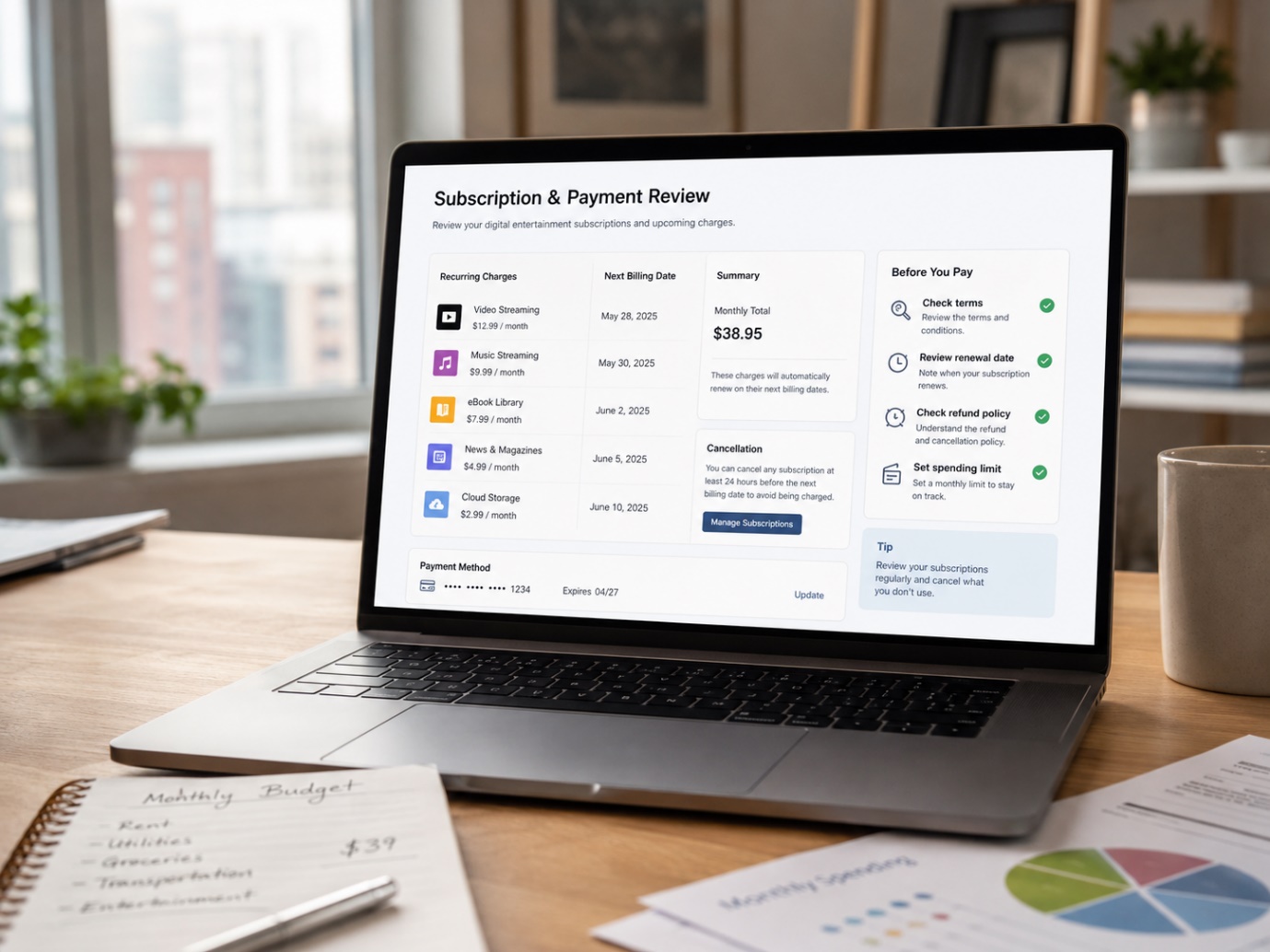
Consumer Protection BC receives complaints about exactly this pattern regularly. Not outright fraud. Not deliberately hidden charges. Just terms that users accepted without understanding, paired with renewal schedules and cancellation rules designed around the expectation that most people will not follow up.
Platforms Are Built to Move You Past the Terms
The signup flow on most digital platforms is optimised to get from interest to payment in the fewest possible steps. Free trials remove the initial cost barrier. Saved cards eliminate re-entry friction. App store billing keeps purchases one tap away. According to Statistics Canada, prices for video and audio subscription services rose by 21 per cent between 2019 and 2024 — meaning the cost of staying subscribed has grown significantly faster than most household budgets have adjusted for.
The terms and conditions exist in every signup flow, but nothing in the design encourages you to stop and read them. The billing rules, renewal dates, cancellation conditions, and refund limitations are all agreed to and then forgotten until something triggers a second look at a bank statement.
The Opening Price Is Not the Ongoing Price
Most introductory offers carry a higher price attached to what happens next. A free trial converts to a monthly charge. A discounted first year renews at full rate. A base subscription sits alongside in-app purchases, premium tiers, and creator payments that accumulate without feeling like separate decisions.
In Vancouver, where average rent for a one-bedroom sits above $2,400, discretionary spending is already under pressure. Digital subscriptions tend to grow in the background while other expenses get more active attention. The gap between what someone thinks they spend on digital services and what they actually spend is often $20 to $40 a month.
Cancelling Is Rarely as Easy as Signing Up
Some platforms cancel immediately on request. Others continue billing until the end of the current period, which may be several weeks away. Some require cancellation through the original app store rather than through the platform’s own account settings — a distinction not made clear at signup.
Refund windows are often narrow and frequently conditional on whether digital content has already been accessed. Before saving payment details anywhere, check three things: how cancellation actually works, when it takes effect, and whether any refund applies if you change your mind within a short window.
This is becoming a more pressing issue in BC specifically. New consumer protection rules announced by Consumer Protection BC take effect August 1, 2026, requiring businesses to give advance notice before subscriptions auto-renew for more than 60 days and allowing consumers to cancel at any time. Knowing these rights before a billing issue arises puts you in a stronger position.
Shared Devices Add a Layer of Complexity
When payment details are saved on a shared or family device, spending becomes harder to track at the household level. One-tap purchases and stored billing mean that a child, partner, or other household member can generate charges without a clear notification going to whoever manages the finances.
Turning on transaction notifications through your bank, auditing app store subscriptions once a month, and agreeing on a household threshold for purchases before they happen are all practical steps. None of them restrict access. They just keep visibility in place.
Verify the Operator Before the First Payment
Before entering payment details on any platform, take two minutes to confirm who runs it. A legitimate service will display a named company, working contact information, and accessible customer support before asking for payment. Consumer Protection BC advises confirming the seller’s identity and understanding the purchase terms before completing any online transaction.
If support channels are difficult to locate before signup, they will be harder to reach when a billing issue comes up. That is a useful test to run early.
Gambling Platforms Require a Different Level of Scrutiny
Gambling-related services involve a different set of financial terms than a streaming subscription. Deposits may be subject to withdrawal conditions that depend on identity verification. Bonuses carry wagering requirements that determine when funds can actually be withdrawn. The gap between depositing and accessing your balance is wider than most users expect at signup.
In British Columbia, the provincially regulated option is BCLC’s PlayNow, which operates under a clear provincial framework. The province is also tightening its licensing and fee structure for online gambling operators, a shift covered in the Vancouver Guardian’s overview of BC’s online gaming reforms. For anyone evaluating other platforms, review sites like Maple Casino compare operators across bonus terms, withdrawal timelines, deposit conditions, and account controls in one place — reading a few reviews before committing to any platform is a straightforward way to know what to expect and what to flag.
Set a fixed budget before you start and treat it as the cost of entertainment. Check the withdrawal timeline and verification requirements before depositing rather than after.
What to Check Before Any Signup
The same short checklist applies to every paid digital platform. What is the billing cycle. When does the renewal happen. How does cancellation work and when does it take effect. Is there a refund window. For gambling platforms, add: what are the deposit and withdrawal conditions, what do the bonus terms actually require, and where are the spending controls.
This takes less time than the signup itself. It is also the only point in the process where the terms are relevant to a decision rather than a retrospective explanation. Consumer Protection BC offers free guidance for British Columbia residents on digital purchases and subscription disputes, and the new rules coming into force this August make it a more useful resource than ever.