
Small and large businesses both benefit from solar energy, but their approaches differ significantly. Smaller operations often prioritize affordability, simplicity, and quick payback, typically installing systems under 50 kW on existing rooftops. Larger enterprises usually deploy systems over 250 kW, sometimes combining rooftop, ground-mounted, or carport arrays with battery storage to meet sustainability goals or hedge against rising utility rates. While both can access net metering and incentives, scale affects design complexity, financing options, and long-term energy strategy.
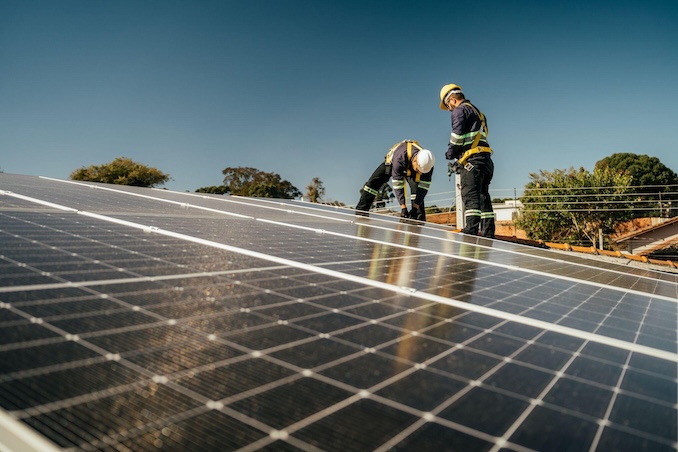
Imagine your monthly electricity bill – not as a fixed cost, but as a variable you can control. Across Canada, businesses of all sizes are rethinking how they power their operations, turning to renewable sources not just for environmental reasons, but for financial resilience. The shift isn’t just about going green; it’s about future-proofing budgets in an era of unpredictable energy prices.
For many, the journey begins with a simple question: What would commercial solar panels look like for my business? Whether you run a neighbourhood café or manage a regional distribution centre, the answer depends on your energy profile, physical space, and long-term goals.
Yet, “one size fits all” doesn’t apply here. A small retail shop and a manufacturing plant may both install solar, but their systems, timelines, and expected outcomes can be worlds apart. Understanding these differences is key to making an informed, strategic investment – one that delivers value for years, not just months.
How Commercial Solar Differs for Small and Large Businesses
While the underlying technology is similar, the way solar is deployed, financed, and managed varies dramatically between small and large commercial operations. These differences aren’t just about size – they reflect distinct priorities, risk tolerances, and operational realities.
Energy Goals and Usage Patterns
Small businesses – think dental offices, auto shops, or boutique retailers – typically use 10,000 to 50,000 kWh annually. Their primary motivation is often straightforward: reduce monthly utility bills and gain predictable energy costs. They rarely have dedicated sustainability teams, so simplicity and reliability matter more than complex reporting.
In contrast, larger businesses – warehouses, food processors, or multi-site franchises – may consume 500,000 kWh or more per year. For them, solar isn’t just about savings; it’s part of a broader strategy that could include carbon reduction targets, brand reputation, or even shareholder expectations. Many track performance metrics like kilowatt-hours generated per square foot or CO₂ offset – data that feeds into annual ESG disclosures.
System Design and Physical Constraints
Space availability and roof condition play a major role in system design. A small business might only have 1,000–3,000 sq. ft. of usable roof space, limiting array size and requiring high-efficiency panels to maximize output. Structural assessments are critical – older buildings may not support the added weight without reinforcement, adding cost and complexity to a commercial solar installation.
Larger facilities often have expansive flat roofs, unused parking lots, or adjacent land, enabling more flexible layouts. Ground-mounted arrays or solar carports become viable, improving panel tilt and airflow (which boosts efficiency). Some even integrate tracking systems that follow the sun – though these are rare in Canada due to snow load and maintenance concerns.
|
Factor |
Small Business |
Large Business |
|
Typical System Size |
10–50 kW |
100–1,000+ kW |
|
Mounting Options |
Rooftop only |
Rooftop, ground-mount, carport |
|
Roof Assessment Needed? |
Almost always |
Often, but newer builds may already comply |
|
Battery Storage Common? |
Rare (due to cost) |
Increasingly common for demand-charge management |
Financing and Payback Timelines
Smaller operations usually rely on upfront capital, leasing, or PACE (Property Assessed Clean Energy) financing if available in their municipality. With lower electricity consumption, their payback period often ranges from 6 to 10 years – highly dependent on local utility rates and net metering rules.
Large businesses, meanwhile, frequently use power purchase agreements (PPAs) or third-party ownership models. These allow them to install solar panels for business use with little or no upfront investment, locking in a fixed energy rate over 15–20 years. This approach shifts risk to the developer while still delivering long-term savings.
Incentives and Grid Interaction
Both small and large entities can benefit from federal programs like the Clean Technology Investment Tax Credit (30% refundable credit as of 2026), but larger projects often require more documentation and engineering reviews to qualify. Provincial incentives vary – some offer additional grants for rural installations or community-focused projects.
Net metering policies also shape system sizing. In provinces where excess generation is credited at retail rates, businesses may oversize slightly to bank summer credits for winter use. However, commercial solar systems sized too large may face interconnection delays or utility-imposed caps, especially in areas with constrained grid capacity.
What to Consider Next: Planning Your Business Solar Strategy
Once you understand how scale shapes solar deployment, the real work begins: turning insight into action. Whether you operate a single storefront or manage multiple facilities, a thoughtful approach from 604 Go Solar can mean the difference between a system that merely functions and one that actively strengthens your bottom line.
Start with an Energy Audit – Not a Sales Pitch
Before talking to any installer, analyze at least 12 months of utility bills. Look for patterns: seasonal spikes, demand charges (common in larger accounts), and time-of-use rates. This data reveals how much solar you actually need – and whether pairing it with storage or load-shifting strategies makes sense. Many businesses overestimate their consumption or install oversized systems chasing “100% offset,” only to leave value on the table due to export limitations.
Evaluate Your Physical Assets Honestly
Not every roof is solar-ready. Check:
- Age and material: EPDM or TPO membranes are ideal; gravel or older asphalt may need replacement first.
- Shading: Nearby trees, vents, or adjacent buildings can significantly reduce output.
- Orientation and tilt: South-facing is optimal in Canada, but east-west layouts can still deliver strong returns with proper design.
If rooftop space is limited, explore alternatives like parking lot canopies or ground mounts – especially if land is underutilized. For tenants, verify lease terms allow permanent installations; some landlords now offer “solar-ready” clauses to attract eco-conscious tenants.
Understand the True Cost Beyond Panels
The hardware – panels, inverters, racking – is only part of the equation. Soft costs often surprise first-time buyers:
- Electrical upgrades (e.g., panel replacements or transformer upgrades)
- Structural engineering reports
- Permitting and interconnection fees
- Ongoing maintenance (snow removal, vegetation management)
Request itemized quotes that separate these line items. A slightly higher upfront quote might include better warranties, local service support, or smarter monitoring – features that reduce long-term risk.
Ask the Right Questions of Installers
When reviewing proposals, go beyond price per watt. Ask:
- How do you model production? (Tools like PVWatts or Helioscope should be used – not rough estimates.)
- What degradation rate do you assume for panels over 25 years?
- Who handles the utility interconnection process?
- Is remote monitoring included, and can I access raw data?
These details reveal whether a provider focuses on quick sales or long-term performance – a critical distinction when your system is meant to last decades.
Plan for the Future, Not Just Today
Technology and regulations evolve. Design your system with room to expand – whether that’s reserving conduit space, choosing modular inverters, or ensuring your roof can handle additional weight later. If your business grows or adds EV charging stations, you’ll thank yourself for building in flexibility from day one.
Solar as a Strategic Business Decision
Adopting solar energy isn’t just about installing hardware on a roof – it’s about aligning your operations with long-term economic and environmental realities. For small businesses, it can mean stabilizing overhead in uncertain times; for large enterprises, it often supports broader commitments to efficiency, resilience, and responsibility.