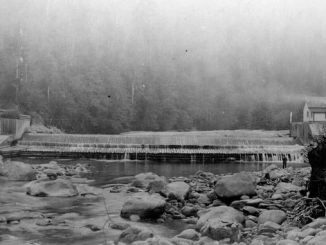
Whitewater rafting isn’t just a vacation-of-a-lifetime thrill — it’s a living, evolving sport and outdoor culture. Here in British Columbia, and especially in the corridors around Vancouver, rafting has become a staple of summertime adventure. It combines nature, challenge, teamwork, and spectacle in one inflatable package. Below is a survey of the sport’s history, how it’s practiced, what makes BC such a hotspot, and where you can go. We’ll even tie in a bit about whitewater rafting near Ottawa — because Canada is full of wild rivers waiting to be paddled.
A Brief History of Whitewater Rafting
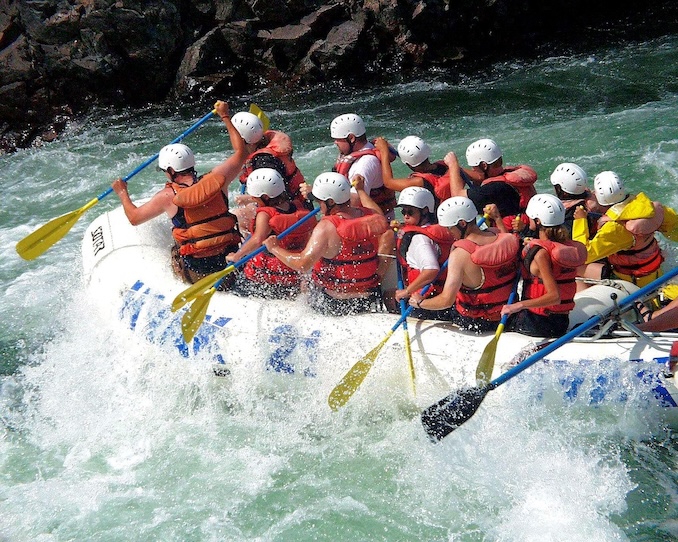
The concept of navigating turbulent river rapids in an inflatable or wooden craft goes back to early exploratory expeditions, though early vessels (like whitehall boats) were really meant for flat water. The modern idea of purpose-built rafts and guided adventure trips matured in the mid-20th century.
In British Columbia, commercial whitewater ventures began sprouting in the early 1970s. The first commercial (multi-day wilderness) rafting outfit in BC was Canadian River Expeditions, founded in 1972. Shortly thereafter, in 1973, a company called Kumsheen started day-trip rafting on the Thompson River — that’s often cited as BC’s first day-trip rafting business. Over the decades, more rivers, more outfitters, and more adventurous runs have expanded the field.
One key milestone was the first rafting of the Kicking Horse River (a major western Canadian whitewater river) in modern times, in 1983. This helped put BC (and the Rockies more broadly) on the map as a destination for “serious rapids.”
So rafting in BC has roots in both wilderness exploration and local entrepreneurial spirit. As roads and access improved, more rivers became commercially viable—and now BC is among Canada’s top whitewater playgrounds.
How Whitewater Rafting Is Enjoyed (and Organized)
Whitewater rafting is not a monolith. There are a few primary modes or “flavors” by which people enjoy it:
1. Tourism / Guided Trips
This is what most casual paddlers will experience. A rafting outfitter provides the raft, gear, safety briefing, guides, transportation, and often food or camping. You show up and participate. These trips can range from a mellow Class II float to adrenaline-pumping Class IV runs. In BC, many outfitters offer:
-
Half-day or full-day runs near Vancouver (e.g. on the Elaho and Squamish rivers)
-
Multi-day wilderness expeditions, often in more remote rivers in the interior or Rockies
-
“Hybrid” adventure trips — rafting plus camping, hiking, perhaps paddling side rivers
-
Early-season runs, when glacial melt makes certain rivers especially wild (for instance the Nahatlatch)
2. Competitive / Race Rafting
While less common than recreational rafting, there is a competitive side. Teams or crews race down a rapid course, often judged on speed and precision. This is more prevalent in regions with suitable rivers, organized whitewater associations, and local paddling communities. (In BC, many more people focus on free-paddling kayaking or canoeing competitions; rafting competition is more niche.)
3. Recreational / Private Rafting
Some paddlers own their rafts and join rivers informally, especially on easier or “fun run” rivers. These are more typical in regions with accessible rivers and a paddling culture. In BC, many rivers are used both by commercial outfitters and by private paddlers (especially those in kayak or canoe).
4. Complementary Sports: Kayaking, Canoeing, Stand-Up Paddling (SUP)
Whitewater rafting shares a watery siblinghood with other paddle sports:
-
Whitewater kayaking / creek kayaking pushes the sport toward solo or small-crew high skill. It often tackles narrower, steeper streams, and demands more precise boat control.
-
Whitewater canoeing works similarly, though the craft and technique differ.
-
SUP in whitewater is a more recent extension—paddlers in inflatable or hard SUPs ride gentler rapids or “play lines” (waves, holes).
-
Riverboarding / hydrospeed / river surfing are niche but closer in spirit: you ride the turbulence more directly, often body-on or finned.
These sports interconnect: many paddlers cross over, and gear, safety techniques, and river knowledge transfer across them.
Why BC (and the Vancouver Region) Is a Whitewater Mecca
Why has BC become such a hotbed for whitewater rafting? A few factors combine:
-
Mountainous terrain and glacial rivers
BC’s geography is ideal: heavy snowpack, glaciers, steep relief, and many rivers channeling down from high alpine zones. That ensures gradient, flow, and continuous rapids in many places. -
Diverse river character
From tame Class II sections to steep canyon drops, BC offers a wide spectrum. Rivers near Vancouver (Cheakamus, Elaho) can be scenic and dramatic, while interior rivers (Thompson, Kicking Horse, Chilcotin, Nahatlatch) offer “big river” experiences. -
Accessibility
Rivers like those in the Squamish / Sea-to-Sky corridor are reachable from Vancouver in a few hours. That makes them feasible for day trips, enticing both locals and tourists. -
Mature outfitting infrastructure
Over decades, outfitters have built safety standards, transport, lodging, guided services, and marketing. The presence of a paddling community (BC Whitewater, guide networks) helps too. -
Adventure tourism appeal
For many visitors, rafting is a “gateway adventure”—not too gear-intensive, high on thrill, and scenic. BC’s wilderness general appeal makes rafting a desirable add-on to a West Coast or Rockies trip. -
Conservation and river advocacy
With groups like BC Whitewater pushing for access, river protection, and sustainable development, the paddling community has more influence on policy and stewardship.
All of this converges to make BC one of Canada’s premier whitewater rafting regions.
Best Whitewater Rafting Spots Near Vancouver & BC Highlights
Let’s zoom into what’s reachable (or relatively so) from Vancouver, then expand across BC’s broader raftables.
Near Vancouver / Lower Mainland / Sea-to-Sky Region
-
Elaho River – Glacier-fed, wild, and dramatic; one of the top draws near Vancouver.
-
Cheakamus River – Family-friendly and scenic, with splashy rapids plus calm segments.
-
Nahatlatch River – One of BC’s most continuous whitewater stretches, with 20+ rapids in a day.
-
Squamish Rafting – Local outfitters running both Elaho and Cheakamus trips.
-
Chilliwack River – About 90 minutes from Vancouver, with day and overnight trips.
These are great “first steps” for Vancouver-area paddlers or visitors.
Broader BC / Interior / Rockies Picks
-
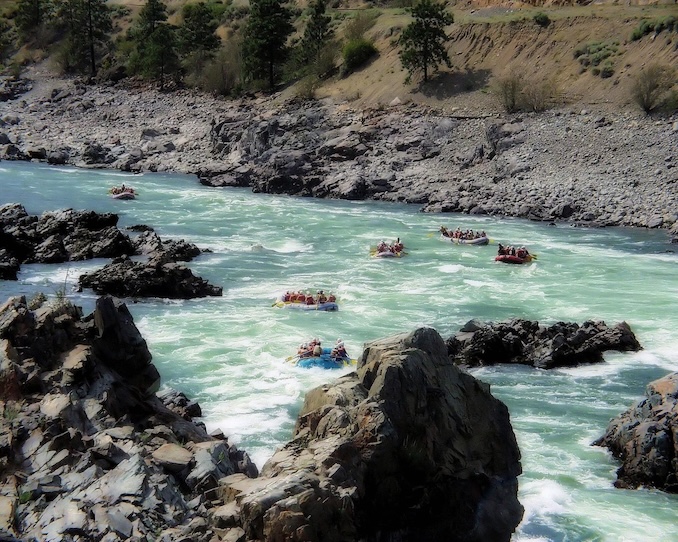
Thompson River (near Lytton)
One of BC’s higher-volume rafting rivers, with Class II–IV rapids. Often run by “power rafts” (inflatable rafts with a motor for large volumes) or paddle rafts. -
Kicking Horse River (Golden, BC)
A go-to for many BC rafting enthusiasts. Sections offer serious rapids, wilderness canyon scenery, and a mix of difficulty levels. -
Chilcotin River
Remote and wild, the Chilcotin is more of a backcountry rafting destination. -
Babine River
In northern BC, a more remote run that appeals to longer expeditions. -
Fraser River (Fraser Canyon runs)
More moderate in many sections, the Fraser is used for scenic rafting with rapids like “Scuzzy Rock” or “China Bar.”
These rivers represent a gradient from local day trips to big wilderness runs.
Why Rafting Appeals — What Draws People
What is it about whitewater rafting that captures imaginations?
-
Adrenaline + teamwork: The rapids demand cooperation, reaction, trust in guides, and quick decision-making.
-
Scenic immersion: You move through canyon walls, forests, glaciers, and untouched country in a visceral way.
-
Accessibility: Compared to climbing, backcountry hiking, or technical mountaineering, rafting is relatively low-barrier (gear is provided, many trips are guided).
-
Variability: No two runs are identical. Water levels, weather, and river morphology change — each trip presents new puzzles.
-
Social / memory factor: It’s a great group activity, for families, corporate outings, friends, or retreats.
-
Connection with nature: Rivers reflect ecological health and geography, offering an environmental lens.
In BC’s case, the added benefits of proximity to wilderness, strong tourism infrastructure, and the reputational draw of the West Coast amplify those appeals.
The Canadian Context: Rafting Near Ottawa and a National Perspective
While BC often gets spotlighted for its dramatic rapids, Canada is full of excellent whitewater opportunities—including in Eastern Canada. For example, the Toronto Guardian has published a helpful guide on where to go whitewater rafting near Ottawa. If you are in the Alberta area, you can check out our guide to best whitewater rafting near Calgary. And if you are in Quebec, be sure to check out the best whitewater rafting near Montreal.
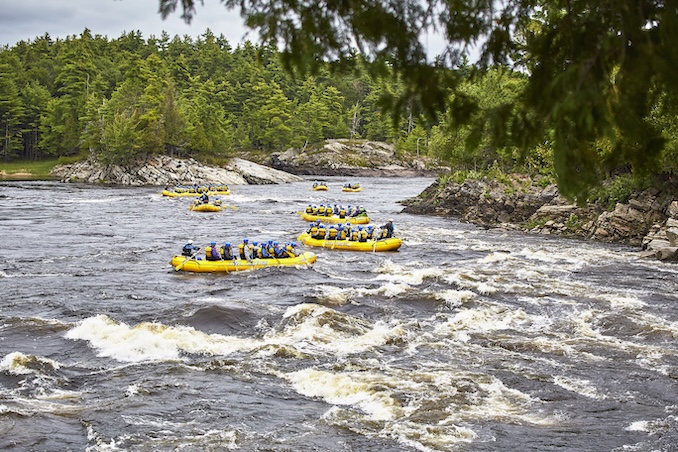
The article complements this BC-centred story by showing how rafting is not a fringe West Coast sport but a nationwide one. In Ontario and Quebec, rivers like those near Ottawa offer accessible Class II–III runs that serve as great entry points for paddlers in the East. For readers in Vancouver, it’s a reminder: the spirit of rafting transcends geography. You might start on a gentle run near Ottawa, then aim to graduate to Elaho or Thompson runs when you get to BC.
In fact, comparing regions can be instructive: rivers in the East often have more seasonal variability, lower gradient, and flow dependent on rainfall or snowmelt, whereas BC’s glacial rivers tend to maintain higher, more stable flows in summer. Still, both regions share common threads of safety, guiding best practices, environmental awareness, and community. Encouraging readers to try local rivers in Ontario (or elsewhere in Canada) supports paddling culture nationwide.
Tips, Safety & Sustainable Practice
Here are a few practical pointers for would-be rafters or paddling enthusiasts in BC:
-
Choose the class wisely — Rapids are usually rated I through VI; guided outfitters will recommend runs appropriate to your experience.
-
Book in advance — Summer is peak rafting season; popular rivers and outfitters get full early.
-
Wear proper gear — Helmet, personal flotation device (PFD), wetsuit or dry suit if cold water, neoprene shoes.
-
Understand water conditions — Glacial melt, rainfall, and river gauges matter. A river safe one day might be dangerous the next.
-
Respect river ecology and Indigenous rights — Many rivers run through traditional territories, and aquatic ecosystems are delicate. Support outfitters who prioritize stewardship.
-
Start easy and progress gradually — Begin with moderate runs before moving to extreme. Use these as training grounds.
Whitewater rafting in British Columbia stands at an intersection of wild landscapes, athletic challenge, tourism infrastructure, and community passion. From the rivers just outside Vancouver (Elaho, Cheakamus, Nahatlatch) to the big interior runs (Thompson, Kicking Horse, Chilcotin), there’s a rafting trip for nearly every taste and level.
And while BC often steals the show in Canadian rafting lore, it’s worth remembering that places like Ottawa and Eastern Canada also foster whitewater culture. The link between a guide on rafting near Ottawa and a BC-focused article is one of national continuity: wherever there’s a river, there’s possibility.
If you like, I can format this as a ready-to-publish Guardian Vancouver blog post (with a catchy headline, subheads, lead, etc.), or even include suggested images or local outfitter profiles. Would you like me to polish it further for publication?